The Real Conversation Jesus Wants Us to Have, by Regina V. Cates (Book Review)

Updated: Dec 26, 2025
Book Review: The Real Conversation Jesus Wants Us to Have: A Call to Bravery, Peace, and Love
Author: Regina V. Cates has a master's degree in leadership and has worked in not-for-profit and for-profit sectors for decades. After an emotional bottom after years of feeling alone, unfairly treated, and depressed, she found a way to shift her thinking from being a victim to taking responsibility for personal actions and achieving a feeling of power, purpose, and peace. Her international best-selling book is Lead with Your Heart: Creating a Life of Love, Compassion, and Purpose (2014). Her mission now is to help individuals connect to their emotions and lead with their hearts.
Publisher: Eerdmans Publishing, 2025 (hardcover) 228 pages
Genres: Memoir, Self-Help, Faith Deconstruction, LGBTQIA+ affirming, Unitarian Universalism, History of Religion & Politics, Church & State Religious Studies
Why I Chose It
I had started following Regina Cates on social media, and I wanted to know more about her solutions to the questions I had about how to follow Jesus after seeing the harm done by the Christian church.
Reflections
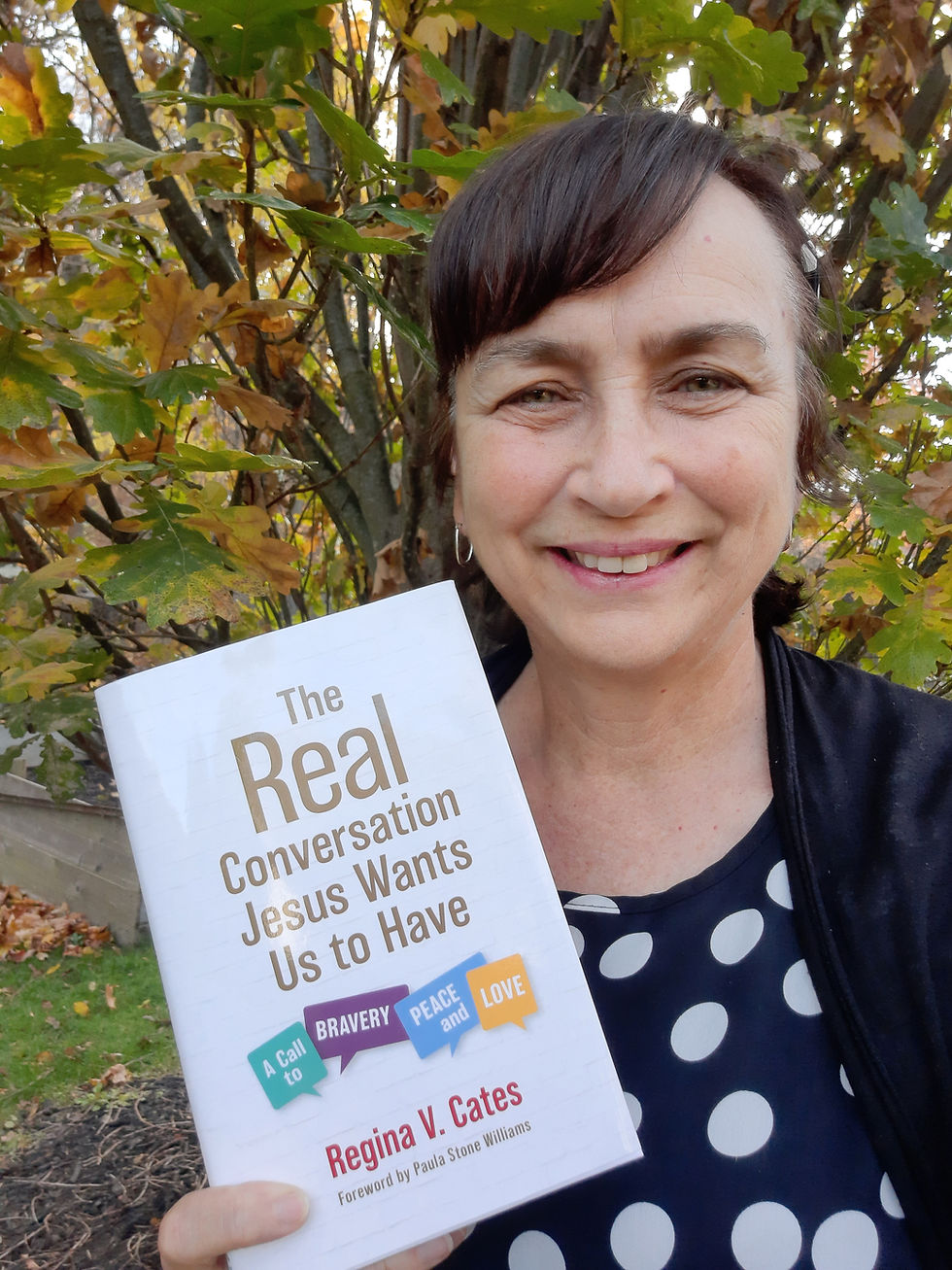
I loved the way this book addressed the inconsistencies of the Christian faith, exposing how some of our doctrines have divided, marginalized, and harmed people. But the unique thing about this book is how Regina Cates shares real and meaningful examples from her personal life and from friends who have shared their stories. She looks at issues such as racism, arrogance against other religions, misogyny, self-hate and self-love, exploitation of other people and the environment. She shows us a way to reject Christian dogma while holding onto Christ. The solution she offers is to live and love all people as Jesus did.
This book would help heal those who feel sidelined, silenced, or betrayed by Christianity or the church. But it would make a difference in church and society if it were read by those who are in power and feel belonging in Christianity in the church. I challenge you to pick up a copy and have a conversation about how to live in peace and love.
Foreword
Rev. Dr Paula Stone Williams writes about how this book will guide readers to a place where we can be re-enchanated by a vibrant spirituality.
Jesus Wants Us to Have This Conversation
If you could sit down and converse with anyone, alive or dead, and you chose Jesus, what would you talk about? Cates proposes that Jesus was a messenger of love, peace, and equity, and that Jesus challenges us to treat everyone the way we want to be treated.
We're Never Supposed to talk about this Topic
Why do they say we should never talk about religion? Religious leaders intentionally use fear as a method of control. Judgment increases divisiveness. Fear makes us feel unworthy and deserving of punishment. We are told God loves everyone unconditionally, and then that we are saved on certain conditions. We sing "Jesus loves the little children" while condemning little gay children. We sing "he saved a wretch like me" while condemning so many marginalized people. Cates quotes from Richard Rohr, who observed that we have often "worshipped Jesus instead of following him on his same path... a religion of 'belonging and believing' instead of a religion of transformation." Cates asks whether a kind, inclusive, supportive Jesus would feel safe in your church, and with the messages being delivered in his name.
We Need to Confront Beliefs That Cause Us to Be Uncomfortable
Like Cates, I have felt uncomfortable with the Christian teaching that people with certain differences are going to hell. Cates explores this discomfort and reveals it comes from our ego, pride, and arrogance that our beliefs are the only ones that are right and true. Cates discusses tools from other religious traditions to examine our emotional scars and exchange our fear for courage. She suggests changing focus from being a "good Christian" to living a "Christlike life". She offers an insight from John Shelby Spong that while Christianity points us to God, God may not be fully defined by the Christian tradition.
Religious Dogma Is Ancient
Here, we confront the inconsistency of Christian dogma that says to hate gay people while loving gay people, and to hate their sin while obeying the command "do not judge". It raises the question of how to accept and love LGBTQ+ brothers and sisters while following religious convictions. Regina Cates struggled with her orientation for many years, feeling guilty, condemned, and filled with self-hate, and was relieved when a psychiatrist told her parents that her sexuality was not a choice. Her parents had to rethink what it meant to hold love for their gay daughter and at the same time hold onto Christ. Cates points out that Scripture is misused when it harms people and corrupts the love that Jesus demonstrated. The church has historically relied on the biblical translation and interpretation of men in power, while sidelining interpretations by women and minorities. Christians accept science that benefits us, such as antibiotics, chemotherapy, or even eating well or handwashing to reduce infection, yet Christians often deny science that indicates human sexuality has a biological component. She encourages us to become educated and able to identify misinformation.
Religion and Morality Are Not the Same Thing
This chapter discusses the difference between calling yourself a Christian and imagining Jesus walking beside you. She discusses the ego as something that drives us to seek power and denigrate those who are "the other". The ego, arrogance, pride, selfishness, and greed for power make us fear "the other." Instead, we need to live in a way to make Jesus proud, to love our neighbours as ourselves.
They Are Us and We Are Them
This chapter discusses loving our neighbour as ourselves and how Christianity today often makes us view anything that looks different as "the enemy". Christian exclusivity and arrogance mean we stop listening to, respecting, and appreciating different experiences and traditions.
Sometimes We Turn the Other Cheek and Other Times We Don't
Jesus sometimes turned the other cheek, and other times he confronted injustice and spoke against abuse. We can choose whether we react with our ego or our soul. Real conversations means that we confront abuse, bigotry, hatred, fear, and divisions
Men of Quality Respect Women's Equality
For our society to have peaceful relationships of love and respect, we cannot teach girls that they are "less than" and boys that they are "more important". The male-domination of church and family comes from ancient secular and religious beliefs passed to us from male-controlled teaching and traditions.
We Need to Talk about Sex
Jesus respected all people and followers of Jesus should be the first to speak out against anyone forcing themselves on anyone. However, Cates shares stories of assault and abuse at homes, Christian schools, and in various Christian church denominations. Christians need to exercise self-control and responsibility. She discusses the difference between forced births and pro-life. Being pro-life means supporting maternity benefits, food, education, and housing for the children and single moms. To end sexism, we must address our part in supporting sex as a form of power. The church can build gender equity by showing God as both male and female, by being transparent about sexual abuse in the church, and by teaching what it means to be emotionally healthy men and women.
Superheroes Are Real
This chapter discusses servant leadership and public servants in government. It discusses the importance of separating church and state to safeguard against distorted ideas being enforced on the population. She calls for followers of Jesus to vote for leaders who show integrity, honesty, and service of the people at the forefront.
United We Stand
Here, Cates discusses how the two-party US political system stokes division, as parties seek more power instead of seeking solutions for the greater good of society. She suggests bipartisan, accountable, collaborative, or cooperative forms of democracy. She suggests we measure our leaders by asking if they are doing what Jesus would do.
Racism, It's Time for Our Come-To-Jesus Moment
Cates discusses how racism, white supremacy, and white privilege continue to show in our society today. She wonders how different Christianity would be if we saw Jesus as the dark-skinned, loving man as opposed the the white, blue-eyed blond male leader. Jesus told his followers not to treat others as less than themselves, but serve others as Jesus served, to love as Jesus loved. She discusses the generational harms from past US legislation and the way US society has treated non-whites as less-than.
We Are Part of God's Big Family
Cates points out that race is a concept created by society, not by science. She quotes James King, "There are no significant genetic variations within the human species to justify the division of races". We say God made all people equal in God's image, but we have a problem with genetic and biological diversity. If we are honest, many of us have DNA that comes from a variety of ethnicities. Our ego makes us afraid of difference, and it fuels disrespect and indifference. It may mean recognizing other religions as valid andn God-inspired. God has given us the tools and Jesus has given us the example and it's up to us to fix what is wrong. We need to open our hearts to others.
To Heal, We Must Feel
Physical and emotional wounds affect our health, reactions and relationships. Too often, we have been told things like children are to be seen and not heard, don't speak unless you have something nice to say, avoid conflict and conform, and being polite is better than being honest. These ideas result in hiding, invalidating our experiences, and making us feel rejected, isolated, and unworthy. We need to acknowledge our emotions and learn to face them in healthy ways. Sharing our emotions makes our relationships deeper and less superficial.
Love One Another as Jesus Loved
The definition of love: taking positive action that makes visible the invisible care and affection we have for ourselves and others. Perhaps the goal of being a Christian is to love as Jesus loved. It means treating others as we want to be treated.The ego is about power and domination, but love does not attempt to change or control or convert others. How do we love like Jesus? The first step is self-love.
Love Has Excellent Vision
Love is not blind. Infatuation is blind. Love is acting with integrity. Love is not tolerating abuse or bullying. Love is speaking against those who mistreat others. Love may demand that we rock the boat to love as Jesus did. Love is not being complicit in harmful teachings. The key to loving others is first to love yourself, stop self-hatred, self-medicating, and stop feeling you deserve to be abused. Love shows in action.
Care About the Legacy We Leave
Let's live in a way that makes Jesus and our children proud. It takes bravery to overcome our ego and to do what is right instead of what is expedient. It takes courage to make a moral choice in the face of opposition. We can choose to lead with love. We can live in peace and love by seeing that others are not that different from ourselves.
Reflections
Reading this book gave me truly personal insights into the ways religion has not only harmed the LGBTQIA+ community but also the way religion can and does perpetuate racism, misogyny, the abuse of the environment, and the insults against people of other religions. We need to listen to each other, hear about these spiritual wounds and religious trauma,s so that we can avoid being complicit in harming others. It seems to come down to a quest for power that is completely unChristlike, and our need to decide to love as Christ loved.
I come from a different background than the author, but I see the value of contrasting today's Christian religion with the way we follow Jesus. As a youth, I was told that we naturally put our ego on the throne, ruling our lives, and that we have to instead put Jesus on the throne, being obedient to our king. Today, I believe putting Jesus on the throne is not about obeying a master but about listening to God's whispering, loving as Jesus loved.
Following the heart of Jesus is less about being subservient to a king and more about acting in love. And sometimes, showing love may mean overturning a Christian teaching. In the words of Nellie McClung, "There is such a thing as divine discontent just as there is criminal contentment". There are times when we must choose between our religious teachings and a relationship, and when that happens, we must choose love.
Regina Cates says that a religion that relies on fear, division, and judgment leads us to act in ways that are not Christ-like. This book offers practical steps towards loving ourselves, loving others, leading with love and loving as Jesus loved. The ultimate measure is not whether we are acting consistently with traditional church teachings, but whether we are acting consistently with what Jesus would do.
Elaine Ricker Kelly Author is empowering women with historical fiction about women in the Bible and early church and Christian blogs about women in leadership, church history and doctrine. Her books include:
Forgotten Followers from Broken to Bold, Book 1, A Novel (2022)
The Sword: A Fun Way to Engage in Healthy Debate on What the Bible Says About a Woman's Role (2023)
Because She Was Called from Broken to Bold, Book 2, A Novel of the Early Church (2024)
Walk with Mara on Her Healing Journey: 21 Steps to Emotional Resilience (2024)
Finding Her Voice from Broken to Bold, Book 3, Acts of Early Female Apostles: A Novel (2025)


Comments